It’s one of the hardest moments for any parent: hearing your child cry out in the middle of the night, rushing into their room, and finding them trembling, wide-awake, and terrified.
Nightmares are a completely normal part of development as toddlers develop vivid imaginations and begin processing the world around them. However, knowing they are normal doesn’t make them any easier to handle in the moment.
Here is a practical guide on how to handle midnight scares and restore peace to your child’s bedtime.
1. Respond Immediately with Physical Comfort
When a toddler wakes up from a nightmare, they need to know they are safe right away.
- Offer physical touch: Hold them close, rock them, or rub their back. Your physical presence is the fastest way to lower their cortisol (stress) levels.
- Use a soothing voice: Speak in low, calm, reassuring tones. Repeat simple phrases like, “You’re safe, Mommy/Daddy is here, I’ve got you.”
2. Keep the Environment Calm and Low-Key
It can be tempting to turn on all the lights or bring them into the living room to distract them, but this can make it harder for them to fall back asleep.
- Keep the lights dim: Use a nightlight or a hallway light instead of bright overhead lights.
- Stay in their room: Try to settle them back down in their own bed if possible, reinforcing that their room is a safe space.
3. Validate Their Fears (Without Feeding Into Them)
Toddlers can’t always distinguish between fantasy and reality. If they say a monster was in the room, don’t dismiss it by saying “monsters aren’t real” right away, as their fear is very real to them.
- Acknowledge the feeling: Say something like, “That sounds like a really scary dream. It’s okay to feel scared, but it was just a dream and it’s gone now.”
- Avoid “checking for monsters”: Spraying “monster spray” or looking under the bed can inadvertently signal to a toddler that there was something to be afraid of in the first place. Instead, emphasize that only safety lives in their room.
4. Build a Rewarding Bedtime Routine
Prevention is just as important as on-the-spot comfort. A predictable, relaxing routine winds down their nervous system before they close their eyes.
- Limit screens: Avoid TVs, tablets, or phones for at least an hour before bed, as bright screens and fast-paced media can trigger active nighttime brain waves.
- Read comforting books: Choose sweet, predictable stories that focus on safety, love, and peaceful themes.
You Don’t Have to Navigate the Night Alone
Every parent hits a wall when sleep deprivation sets in, and it’s completely normal to feel overwhelmed when nighttime fears disrupt your home. Managing constant sleep disruptions can lead to intense parental burnout, making it essential to prioritize your own well-being alongside your child’s. If you are feeling the pressure, incorporating quick stress relief techniques like grounding exercises and breathing patterns can help you stay anchored during those stressful midnight wake-up calls.
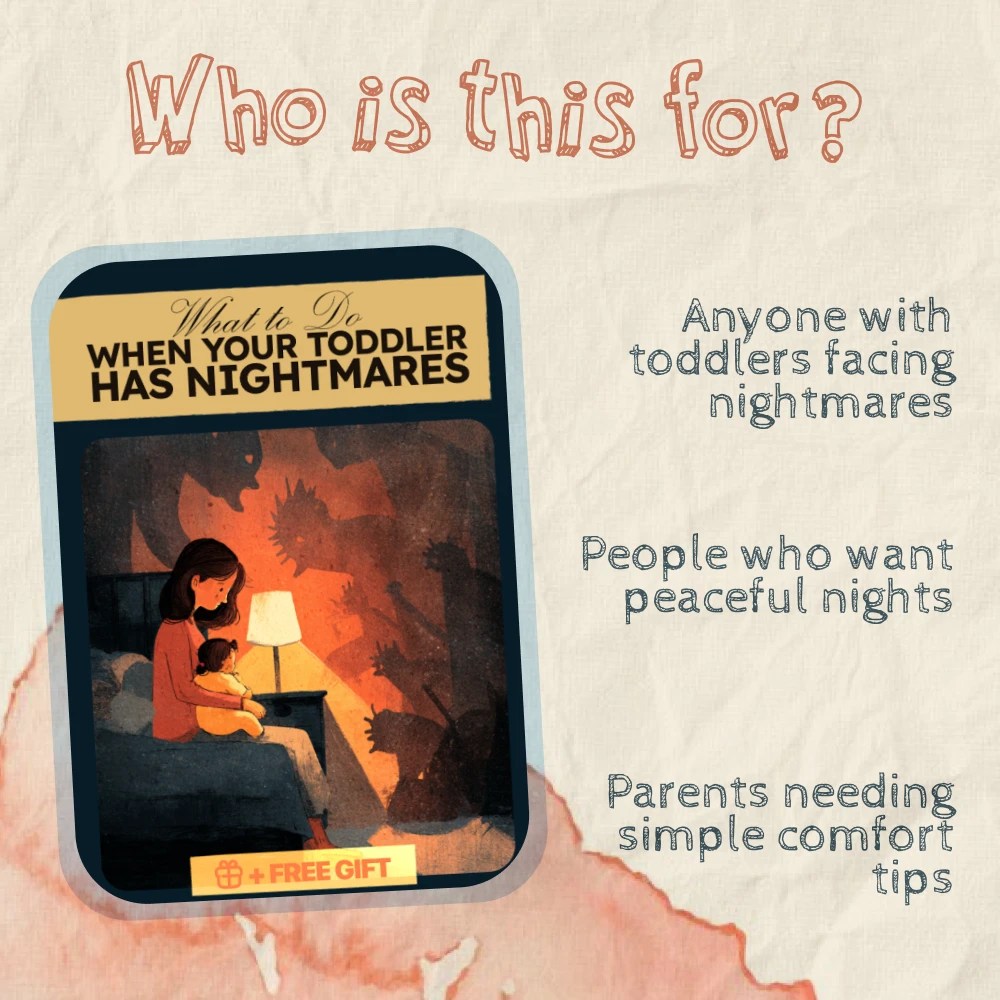
If you are looking for a deeper dive into managing these late-night disruptions for your little one, more help is just a click away. You can access a comprehensive digital guide for parents that breaks down these childhood sleep challenges into step-by-step solutions. This downloadable parenting resource offers gentle, practical strategies to help ease your child’s anxiety, smooth out your bedtime routines, and help the entire family get the restful, restorative sleep you all need.


Leave a Reply